How to read a lighting proposal when you don't have a lighting degree

After fifteen years leading my lighting design company, one of the most frequent questions I hear from architects and interior designers is this:
"How do I know if a lighting proposal is actually good?"
You've developed a strong concept. You know what your client’s ideal feeling/atmosphere is. Then the lighting proposals come in: from suppliers, electrical consultants, or junior lighting designers, and suddenly the outcome feels… uncertain. One proposal looks good on paper, another is more expensive, and a third uses recently trending fixtures you've seen in magazines.
But which one will actually deliver the atmosphere you promised?
Without formal lighting training, it's easy to end up choosing based on price, fixture aesthetics, or the confidence of whoever is presenting. None of those things reliably predicts how the finished room will feel. I've seen expensive proposals produce flat spaces, and modest ones produce something genuinely special. The difference is rarely the budget.
In this post, I want to share how I actually read a proposal. Not a checklist, but the things I look for first, the patterns that immediately raise a flag, and the questions I ask when something feels off.
These are the five things I’ll cover:
What I actually check in a lighting plan
How to tell if lighting looks flat
The questions I ask lighting designers when I’m unsure of a proposal
The features of a strong lighting proposal
Four questions you need to bring to your next meeting
The first thing I look at isn’t the fixtures
Most proposals lead with product selections. Fixture names, finishes, technical specs, and price per unit. It looks thorough and professional. But when a proposal opens with fixtures, that's already a mild warning sign for me.
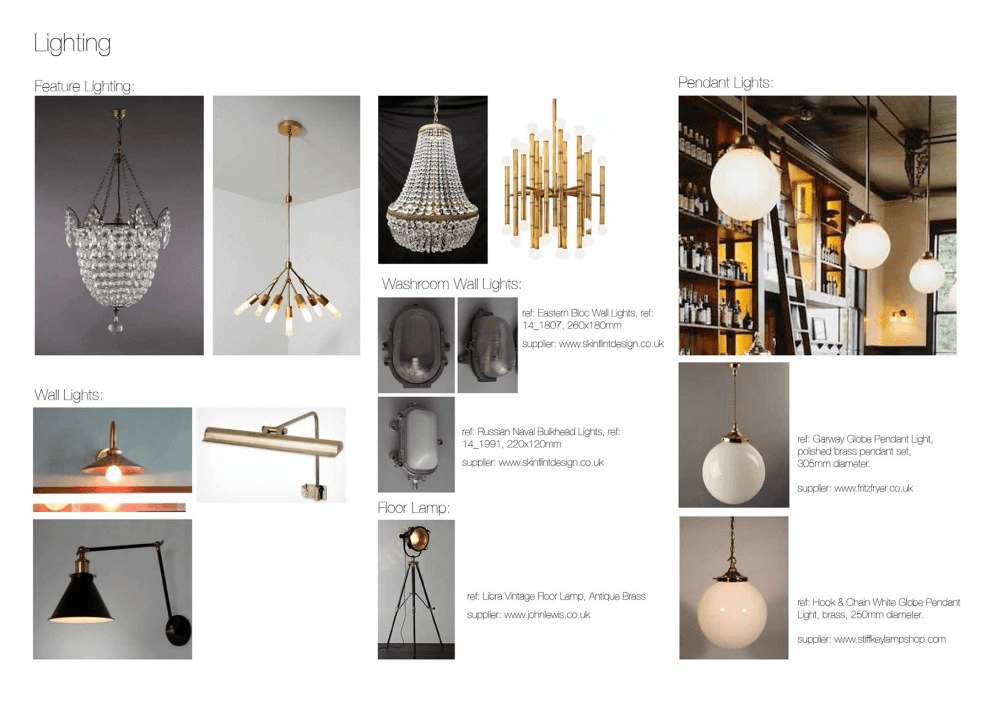
If this is the first page of the proposal, run!
Fixtures are the last decision, not the first. A good lighting proposal should start with the space: how it will be used, what atmosphere it needs to support, and where the eye should travel. If I can't find that thinking somewhere in the document, I start to wonder whether the proposal was built around the design intent or around what the supplier had in stock.
If you had to condense this down into one sentence, it would be: Function before fixtures.
Knowing the function/purpose and intention will lead to thoughtful fixture choices. Not the other way around.
The first question I ask is simple:
Does this proposal understand what the space is supposed to feel like? Not what it looks like on the plan. Does the proposal know what it's supposed to feel like at 8 pm on a Tuesday when the client is actually living in it? Or when the client wakes up in the morning and is having their morning coffee?
What flat lighting looks like on paper
The most common problem I see in proposals isn't wrong fixtures. It's a single layer of light applied evenly across the whole space, usually recessed downlights on a grid, maybe some pendants over a table, and nothing else.
This approach is safe. It's easy to specify and easy to install. And it almost always produces a space that feels like a well-lit office rather than a well-designed interior.
What I'm looking for instead is evidence of layering: an ambient light that sets the overall comfort level, a task light where people actually do things, and an accent light that makes the materials and architecture work. Not every project needs all three in equal measure, but a proposal that ignores two of them entirely is almost always going to flatten the space.
The real giveaway is this: look at how many circuit types or dimming zones are proposed. One zone across the whole room means someone has designed for a single scenario. Real spaces are used in different ways at different times, and the lighting needs to be flexible enough to support that.
The questions I ask when something feels off
When I'm reviewing a proposal and something doesn't sit right, I've learned to trust my intuition instinct and dig into it. It’s a feeling you’ll have to nurture and develop with experience but it usually it comes down to one of three things.
The first is placement logic. Where fixtures are positioned tells you a lot about whether the designer was thinking about the experience or the plan. Downlights centered on a ceiling grid look tidy on paper but often land in completely wrong positions relative to how the furniture is arranged or where the walls need to be washed with light. I always ask: if I stand in the middle of this room, where will the light actually fall, and does that serve the space or just fill it?
The second is color temperature consistency. Mixing warm and cool sources in the same space is one of the most common mistakes I see, and it's almost invisible on paper. A warm pendant over a dining table next to cool downlights in the adjacent kitchen creates a visual tension that most people can't name, but everyone feels. I look for whether the proposal has thought about this across the whole scheme, not just within each zone in isolation.
The third is what I'd call material blindness. A proposal that doesn't reference the specific surfaces, textures, and finishes in the space worries me. Light behaves completely differently on polished concrete versus rough plaster versus warm timber. If the proposal could have been written for any space or is too generic, it probably wasn't written with your space in mind.
What a strong proposal actually looks like
The best proposals I've reviewed over the years share a few qualities that have nothing to do with budget or brand names.
Strong proposals show their thinking. There's a clear line between the atmosphere the designer is trying to create and the specific choices they've made to get there. You can follow the logic from intent to execution, and when you can't, you can ask why.
Thoughtful proposals make trade-offs visible. No proposal is perfect, and good designers know that. A strong proposal acknowledges where compromises have been made and why: "We've prioritised warmth in the living areas and accepted slightly less flexibility in the kitchen" is a more trustworthy sentence than a proposal that promises everything.
And my favourite: Strong proposals leave room for the architecture to breathe. The best lighting proposals I've seen don't try to do too much. They identify the two or three moments in a space that matter most and make sure those land correctly, rather than applying the same level of attention to every square metre equally.
Four questions to bring to your next proposal review
If you want something concrete to take into your next review, these are the four questions I come back to every time. They don't require technical knowledge. They just require holding the proposal up against the original design intent.
Does this proposal start from the atmosphere or from fixtures? If the first pages are full of product specs and the feeling of the space comes as an afterthought, that order tells you something about how the thinking was done.
How many lighting layers does it use? A scheme built entirely on downlights is a scheme designed for convenience, not for atmosphere. Look for evidence that ambient, task, and accent have each been considered deliberately.
Is the color temperature consistent across the whole space? Warm and cool sources fighting each other is one of the most common causes of interiors that feel slightly wrong without anyone being able to say why. Check whether the proposal treats the scheme as a whole or zone by zone in isolation.
Does it reference your specific materials and architecture? A proposal that could have been written for a different project probably was. The placement logic, the beam angles, the fixture choices should all connect back to what your space is actually made of.
Run any proposal through those four and you'll have a much clearer sense of whether it was genuinely designed for your project or assembled from a familiar template. That's usually the difference between a space that delivers and one that disappoints.
- Jimmy Chu is a lighting designer with 15 years of experience leading AECOLIGHT, an award-winning lighting design agency. He is the founder of CHUBIC, which helps architects and interior designers make confident lighting decisions that better match their original design intent.
