Can we stop obsessing over natural light?

Architecture and lighting design get treated as the same conversation, and they're not.
Architecture often starts with the sun and its relationship to the space: window placement, orientation and daylight quality are all fundamental to how a building performs.
Lighting exists to solve a different problem entirely. Artificial light was invented because the sun goes down, which means its primary job usually starts after sunset. Candles became commonplace because life didn’t stop when the sun went down.
My point isn't that daylight doesn't matter; natural light is genuinely important. But it's only one input into a lighting concept. We shouldn’t forget that a space needs to be lit for all the other hours when the sun isn’t available. And this need drastically changes depending on where you’re located.
This is not me speaking out of bias, but from 15 years of working alongside architects and interior designs, there’s sometimes too much focus on natural light. When I'm designing lighting, the first question I ask isn't where the sun sits: It's when and how people use a space.
Lighting exists because the sun goes down
There's a paradox worth stating plainly. Lighting was invented to solve the moments when there isn't enough natural light, yet when architects talk about lighting, the conversation is still overwhelmingly about daylight.
But why is that?
Some of that comes down to how architecture gets seen. Most buildings are photographed during the day, when the light is flattering, and the shadows are dramatic. But most buildings are actually occupied after daylight starts fading. You’ll spend most of your time at home in the evenings and early mornings. Restaurants with lunch and dinner services will need natural and artificial lighting. And so on.
The industry ends up optimising for the hero shot rather than the experience. Daylight may dominate lighting discussions because it photographs well, not because it's when the space does most of its work.
Understanding daylight isn't the same as understanding lighting. They're related, but they're not interchangeable, and treating one as a stand-in for the other is where a lot of lighting concepts go quiet after sunset.

Tadao Ando's Church of the Light is a useful illustration of this natural vs artificial tension.
The cross-shaped opening is one of the most photographed moments in architecture, and it earns that reputation in daylight. After sunset, the same space goes largely dark, and its original concept becomes much harder to read. If I were extending that concept into the evening rather than redesigning it, I'd want the cross lit from within so it stays visible after dark, the ceiling washed indirectly to keep the sense of something above the room, and a soft line of light beneath the benches so the feeling of support doesn't disappear when the sun does.
The design is not a failure in any way, but as a lighting designer, I feel that the space could be used more with some help. A concept that only works in daylight is only doing half its job. The strongest ones carry the same idea through both halves of the day.
Design for when a space is used, not where the sun is
Designing lighting doesn't start with where the sun is. It starts with when the space will actually be used.
Take a restaurant running both lunch and dinner service.
The lighting at lunch is often brighter than at dinner, with plenty of daylight coming through the windows. Daylight through a window can reach somewhere around 1,000 to 1,500 lux, while typical interior lighting sits closer to 300 lux. But there’s an issue: without enough artificial light to close that gap, one side of the room will be far darker than the other, and the space feels lopsided. There's also a comfort problem. Someone walking in from bright daylight has eyes adjusted to that brightness, and dropping straight into a dim room feels uncomfortable because the eyes can't adapt instantly. Brighter daytime lighting smooths that transition.
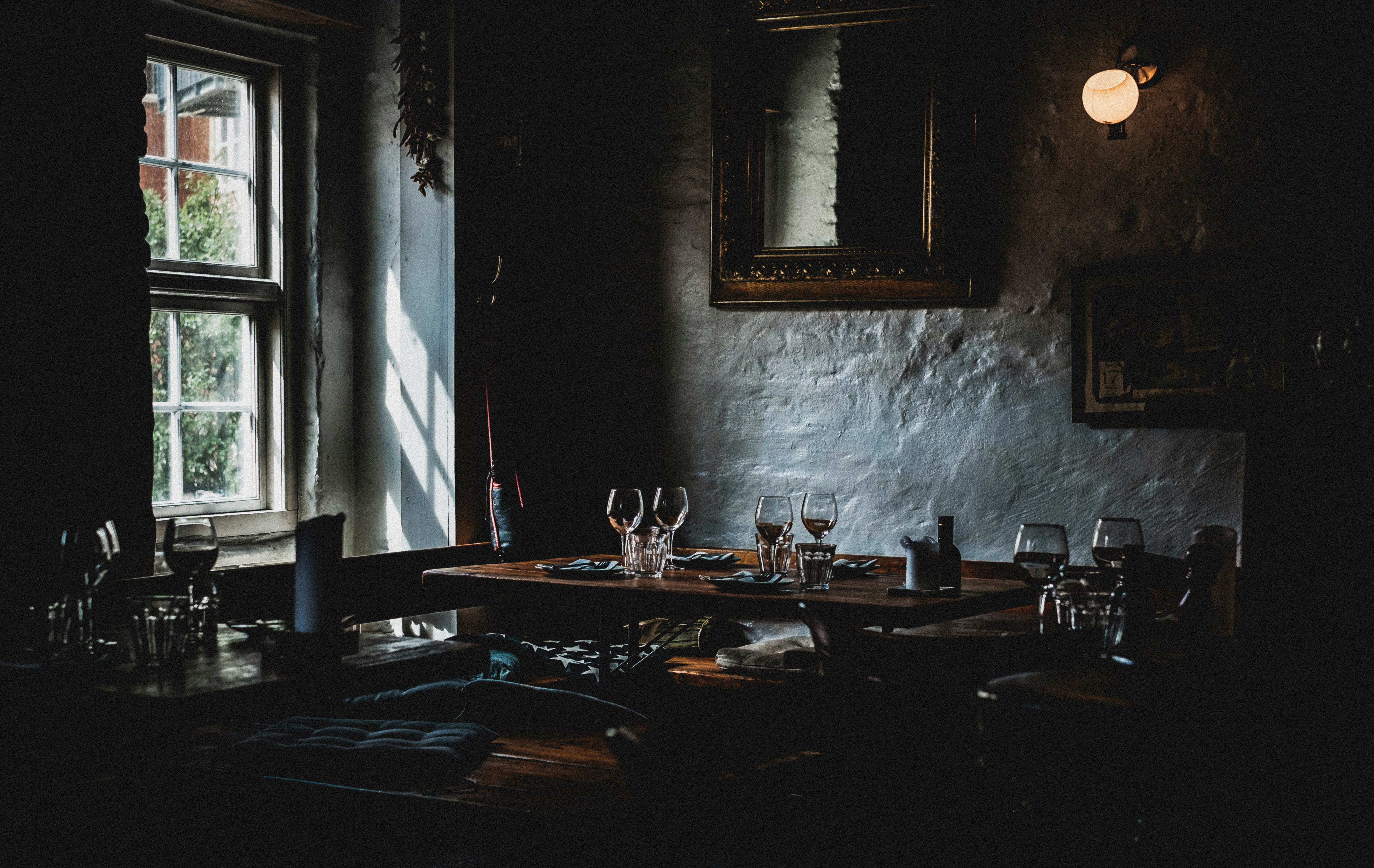
There are two common ways to handle it.
One is to raise the artificial lighting to match the daylight, which is the route brands like Apple and UNIQLO take when they want a bright, transparent feel. The other is to control the daylight itself with curtains or blinds, which is more common in restaurants, museums, spas and bars, where holding a particular atmosphere matters more than letting in as much natural light as possible.
You’ll find that the same logic runs through most building types once you know what the primary use case is. A hair salon needs stable, controlled light because daylight throws off colour accuracy at the chair. A speakeasy is built around blackout and artificial lighting from the very start, because daylight was never part of the concept. A church's most important lighting moment is usually the evening service, not the afternoon sun. A retail space needs to hold its lighting concept through closing hours, well after the daylight it was photographed in has gone. None of these are exceptions. They're the rule.
Two different questions, asked at two different phases
In practice, this works best as two separate stages rather than one blended decision.
During architectural design, daylight deserves real attention: building orientation, window placement, ventilation and the quality of natural light are architectural decisions, and they should be made with the sun in mind. Once the project moves into lighting design, the question changes. Instead of asking how the space looks during the day, ask when the artificial lighting kicks in, and design around that.
For residential projects, I'd almost always build the lighting concept around nighttime. Systems that automatically respond to changing daylight do exist, but they need a bigger budget and show up in relatively few homes, so night is the more reliable design target.
Commercial projects need one more question first: is this business mainly used during the day, at night, or fairly evenly across both?
The answer changes your strategy.

A restaurant needs brighter lighting at lunch and something more intimate at dinner. An office needs lighting during the day for its workers but continued lighting into the early evening. A spa dims everything down because the goal is calm, not brightness. None of these gets solved by studying the sun a little harder. They get solved by asking who's in the room, and when.
Architecture can reasonably be designed around daylight. Lighting can't, not if it's meant to do its job. Natural light is a useful input into a lighting concept, but it shouldn't be the starting point for one.
About the author
Jimmy Chu is a lighting designer with 15 years of experience leading Aeco Light. He is the founder of Chubic, a platform helping architects and interior designers make confident lighting decisions earlier in the design process.
